In the complex ecosystem of infrastructure management and municipal services, there is a metric that often remains buried under layers of invoices and disorganized spreadsheets: Total Cost of Ownership (TCO). For an Operations Director or a Municipal Engineer, the purchase price of a water pump, a fleet of electric vehicles, or a network of LED luminaires is just the tip of the iceberg. The real financial pressure does not lie in the initial investment (CAPEX), but in the long and often inefficient tail of operational costs (OPEX) that accumulate over decades. If your organization is unable to track every euro invested in repairs, spare parts, and man-hours back to a specific asset, you are not managing; you are navigating blindly.
The Acquisition Cost Trap vs. The Lifecycle
The most common mistake in public procurement and B2B Facility Management is prioritizing the cheapest asset in the initial tender. However, advanced management software reveals an uncomfortable reality: the accumulated maintenance cost over ten or fifteen years can far exceed the original purchase price. An asset that looks "cheap" today can become a "zombie unit" tomorrow, devouring the preventive budget due to recurring failures or a lack of standardized spare parts.
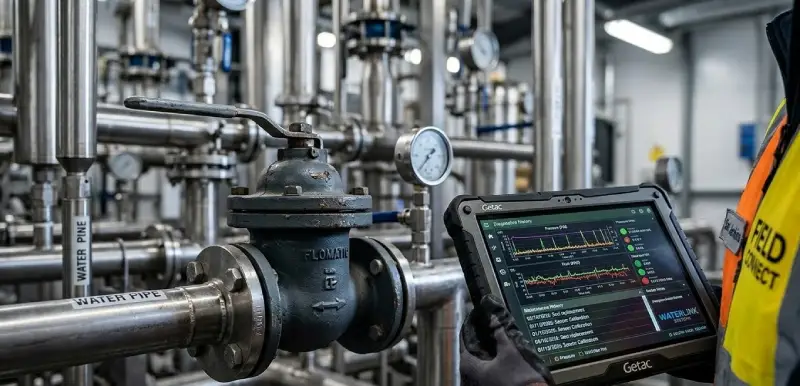
The field digitalization proposed by Maptainer allows for the automatic attribution of labor costs to each asset—based on the hours faithfully recorded by the technician—and the value of the materials used. By centralizing this information, managers can calculate the real TCO per unit. Is it more profitable to keep repairing that 1995 electrical panel, or is it time to replace it with a new one? With data in hand, that decision stops being a political or subjective opinion and becomes a strategic financial move.
Eliminating Profitability "Leaks" at the Source
One of the biggest operational headaches for maintenance companies is the loss of information between the field technician and the office. Does your team lose hours locating faults or filling out paperwork?. This inefficiency not only frustrates the staff but also destroys TCO accuracy. When an operator uses a grease-stained notebook to record which valves they have serviced, half of the minor consumables—screws, oils, gaskets—disappear from the financial radar.
Maptainer’s mobile technology tackles this problem through "invoicing from the source". The technician does not write on a blank piece of paper relying on their memory; they select materials from a predefined list with updated references and prices on their device. The system automatically records the start and end time of the intervention using the device’s clock, ensuring that every minute of work is assigned to the correct asset. This precision is what allows for the construction of a reliable TCO model, identifying which specific assets are below the profitability threshold.
The Map as a Financial Audit Tool
The integration of geolocation (GIS) adds a critical layer to cost analysis. It’s not just about how much it costs to maintain an asset, but why certain assets in specific locations cost more. By visualizing costs on a map, it is possible to detect geographic patterns: Do infrastructures in the north district suffer more due to salinity or humidity? Are technicians losing excessive time commuting to a poorly planned area?
This approach allows technical management to move from reactive maintenance to proactive maintenance based on the asset's financial health. By identifying "hotspots" of spending on the map, renewal investments can be prioritized in those areas where the TCO is out of control. It is the ultimate expression of 100% digital field operations: turning every technical intervention into valuable data for the bottom line.
Transparency and Legal Protection
Finally, rigorous management of the asset lifecycle is the best shield against financial liability. In public contracts and B2B agreements, the ability to prove that preventive maintenance has been carried out according to regulations is vital. Maptainer acts as a digital notary: "Protect yourself against claims by proving every job done".
Every time a technician closes a work order, the system generates immutable evidence with a timestamp, GPS coordinates, and "before and after" photos. If an asset fails and causes an incident, the company can present a full TCO and maintenance history that demonstrates its professional diligence. Total transparency not only improves operational ROI but also safeguards the organization’s prestige and legal security.
In conclusion, the future of maintenance is not about working harder, but about working with better data. Adopting a vision based on Total Cost of Ownership, supported by Offline First tools and automatic synchronization, is the only way to guarantee the sustainability of modern infrastructures.